
Açaí and Well-Being: Heart, Gut, and the Ritual That Feels Like Care
Wellness copy loves superfoods. So let us do this properly: what the evidence reasonably supports, what it does not, and where a bowl earns its place in a healthy routine.
What the purple actually does
Anthocyanins are the most-studied compound family in açaí. Research associates them with reduced oxidative stress and anti-inflammatory effects in the body — the kind of effects that matter over years, not hours. Olive-oil-style unsaturated fats fit comfortably in heart-healthy diets. The honest framing: açaí is a good choice, not a medicine.
The gut angle: fiber, gently
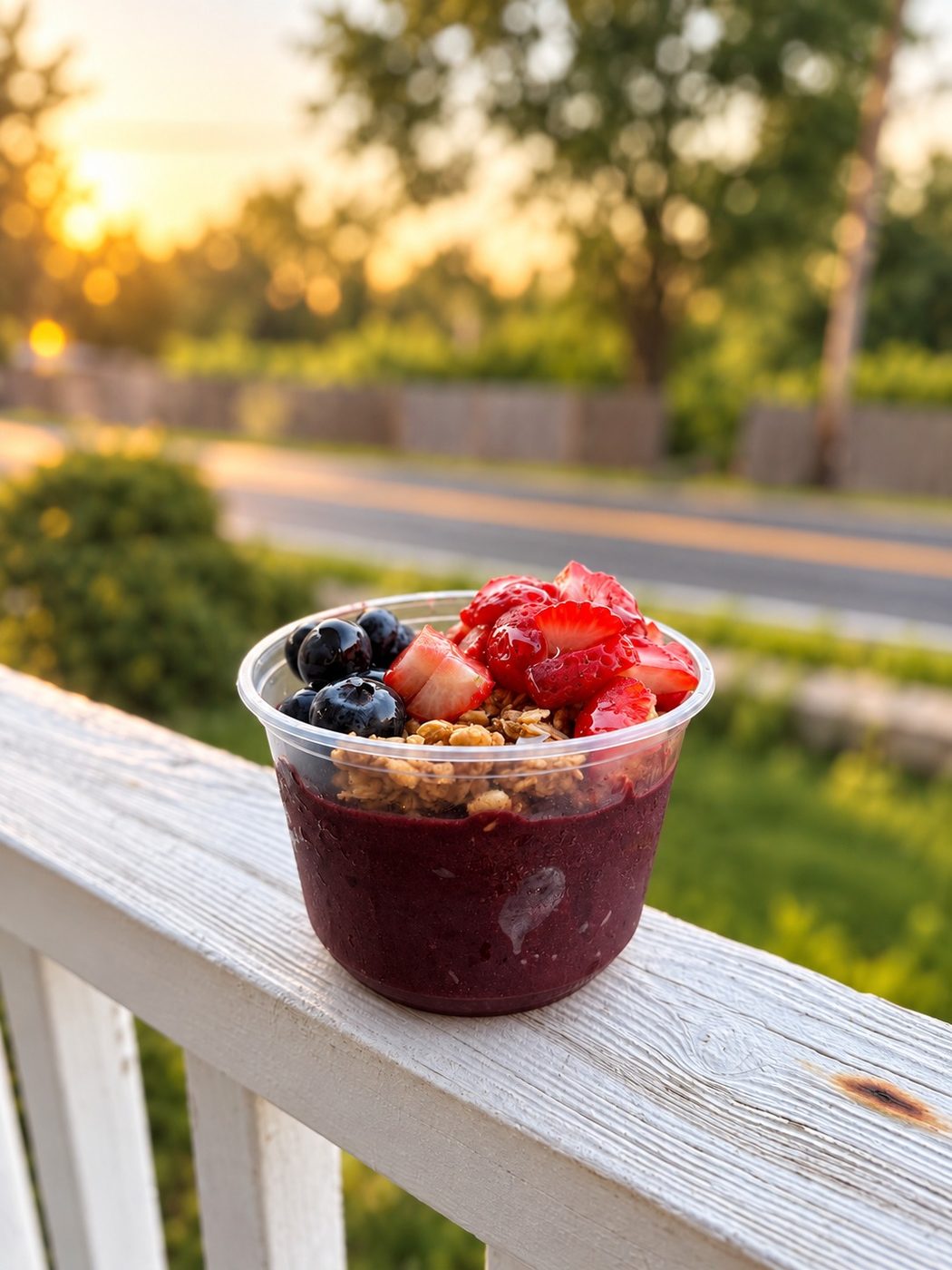
The pulp carries fiber, and fiber is the substrate your gut bacteria feed on. In a bowl loaded with fresh strawberries, blueberries and banana, you are eating several different fruit fibers at once — a decent reason to make açaí a regular habit rather than a guilty treat.
Where the bowl can tip: the topping dial
Here is the part açaí brands rarely print. The base runs about 100 kcal per 100 g; a full toppings build with condensed milk, Nutella and chocolate chips can add 300 to over 500 kcal to a 24 oz bowl. None of it is wrong — that is dessert territory, and it should be treated as such. If açaí is your everyday fuel, lean toward fruit, granola and the occasional sweet; our Protein Power build with peanut butter and chia is the one we reach for on busy mornings.
The third benefit: the ritual
Eat it standing in the car and you get a snack. Sit down, put the phone away, and take twenty unhurried spoonfuls and you get a small daily moment of calm — and, in a town the size of Walpole, a reason to talk to neighbors again. Well-being, sometimes, looks like a bowl eaten slowly.
Good food, good vibes — not a slogan, a recipe.
Feel-good order
Classic Bowl, 16 oz, $15 — the balanced build we would serve our own families.
Order on WhatsApp